
The second to last sin is Envy, which is to be jealous or to gain pleasure from seeing others brought down. It has parallels to greed, however greed relates more to materialistic possessions while envy could be the want of what others already possess in their personality. It could be put into terms with Macbeth where he desires what Duncan has, although he originally wanted to be king to quench his thirst for power. Yet he was more envious when he learned of Malcolm being the heir to Duncan and not himself. The Divine Comedy condemns Macbeth for having such jealous thoughts and gaining pleasure from taking kingship away from Malcolm, leading him to the consequence of having his eyes sown shut forever.
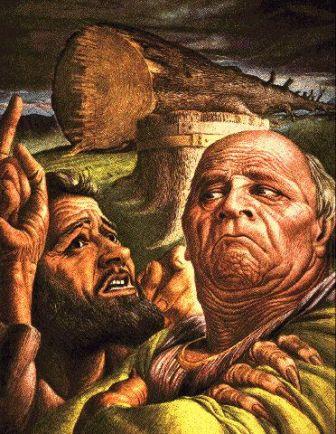
Finally there is Pride; it is said that it is the most severe of all sins, for all other vices have been birthed in some form of pride. Macbeth’s pride is what brings his tragic fate upon him at the end of the play. He gains egotistical behaviour after becoming King and learning that “none of woman born shall harm him”. This arrogance is what changes Macbeth’s personality and allows him to justify whatever he does to maintain the power he has. He continually feeds his own self-esteem as he vanquishes his enemy right until his death. If Macbeth had not been so prideful, he may not have been so indulgent in the other sins he committed.
It can be argued that his envy surfaced after his self-worth was hurt because he was not named the heir of Duncan. His wrath became a tempest as others rejected his rule, which in his mind was perfect. Macbeth’s sloth originated because he did nothing for Scotland and only instead focused solely on his own situation. To add, he refused to give up his greedy ways and felt he deserved everything given to him. His gluttony to not provide for others was rooted because of his arrogance, while his lust for power was spawned from learning that he could be a powerful ruler. For this, Macbeth will be forced to walk with stone slabs bearing down on his back to induce humility just as it is written in the Divine Comedy.
Macbeth was a sinner; there is no doubt to that claim. He gave in to his ambition and fell into darkness to satisfy his own Earthly desires. For what he has done, he will forever be burdened with his vices and must repent for all eternity in hell.
Take the quiz and see what your sin is: http://www.4degreez.com/misc/dante-inferno-test.mv

No comments:
Post a Comment